Attention is all you need
But event organizers make you pay for it. Events are heavily pay-to-play, especially the big ones. Companies pay for access to the audience, but organizers are profit-minded - and profit comes from sponsors. The result is that the equilibrium between people there to sell and people who might buy is rarely in your favor. Anyone who looks like a good fit is being hounded by 200 other companies at the same time.
I’ve seen a lot of companies spend 4-5 figures on an event and then miss the actions that often bring more value than the whole participation combined.
I’ve worked almost exclusively with mid to high ACV companies, often from underdog positions - no gold sponsorship budget, no massive booth. Making the most of whatever money was being spent was the whole game. What I’m sharing here is most relevant for medium to large events (2,000+ attendees), though the principles scale down.
Here is how to compete when you can’t afford the big gold sponsorship. Depending on your resources, here’s what actually works - before, during, and after.
Before the event: three things that actually work
There are many elements that can make an event successful and what you prioritise depends on your resources. Here are three I’ve consistently seen deliver:
1. Invite your ICP to the event
Tell prospects you have invitations available. You don’t need to buy them upfront - send the messages first, and if people accept, purchase accordingly. This is a fantastic icebreaker because you’re leading with something of value. Even if they decline the event itself, you’ve opened a door. “I can’t make it, but let’s set something up when you’re in town” is a response I’ve gotten more than once.
2. Track social activity around the event
Who’s announcing they’re attending? Who’s engaging with the official event page? Are there LinkedIn event attendees you can see? This is free intelligence that most teams completely ignore.
3. Set up meetings in advance through the networking platform
Most large events now have networking platforms that go live weeks before the event. If you can access the attendee list early, start reaching out via LinkedIn or enrich them with emails to book meetings before you even arrive.
At the event
I’ll skip the at-event playbook. It’s highly dependent on your company, your product, and the specific event. If you don’t know what works, befriend people who do and genuinely ask them. It’s also very budget-dependent - if there’s money available, look into hosting side events, co-marketing with non-competing companies that sell to the same ICP, and similar plays.
But here’s what I see constantly: companies invest heavily in the event itself - the booth, the branding, the side events - and then completely miss the post-event strategy. Which, in my experience, is where the majority of results actually come from.
Post-event: where 70%+ of the results come from
Obviously, follow up on the conversations you had at the event. But here’s what most people miss:
Get the attendee list, enrich it, filter it, and reach out.
Most events make attendee or exhibitor data available in some form - through a networking platform, a mobile app, or a public directory. The data is often there. You just need to extract it, clean it, and work it.
The message is simple: the event was chaotic, you couldn’t talk to everyone, but you noticed they were there and you’d like to connect because of [specific, relevant reason].
This is not spray-and-pray. You filter the list to your ICP, you personalise, and you reference a shared experience (the event) that makes the outreach warm rather than cold.
How I extracted 12,000+ attendee records from E-commerce Berlin Expo using Claude Code
Let me show you what this looks like in practice - the full pipeline from extraction to enriched, outreach-ready contacts.
For a recent project around E-commerce Berlin Expo, I needed the full attendee dataset: 268 exhibitor companies, 1,509 exhibitor representatives, and 10,946 visitors.
The old way vs. the new way
I’ve been scraping data for years. It has a real learning curve - understanding how pages render content (server-side vs. client-side JavaScript), figuring out where the data actually lives (hidden APIs, paginated endpoints, React Server Components), dealing with authentication, anti-scraping protections, and a dozen other things that can go wrong.
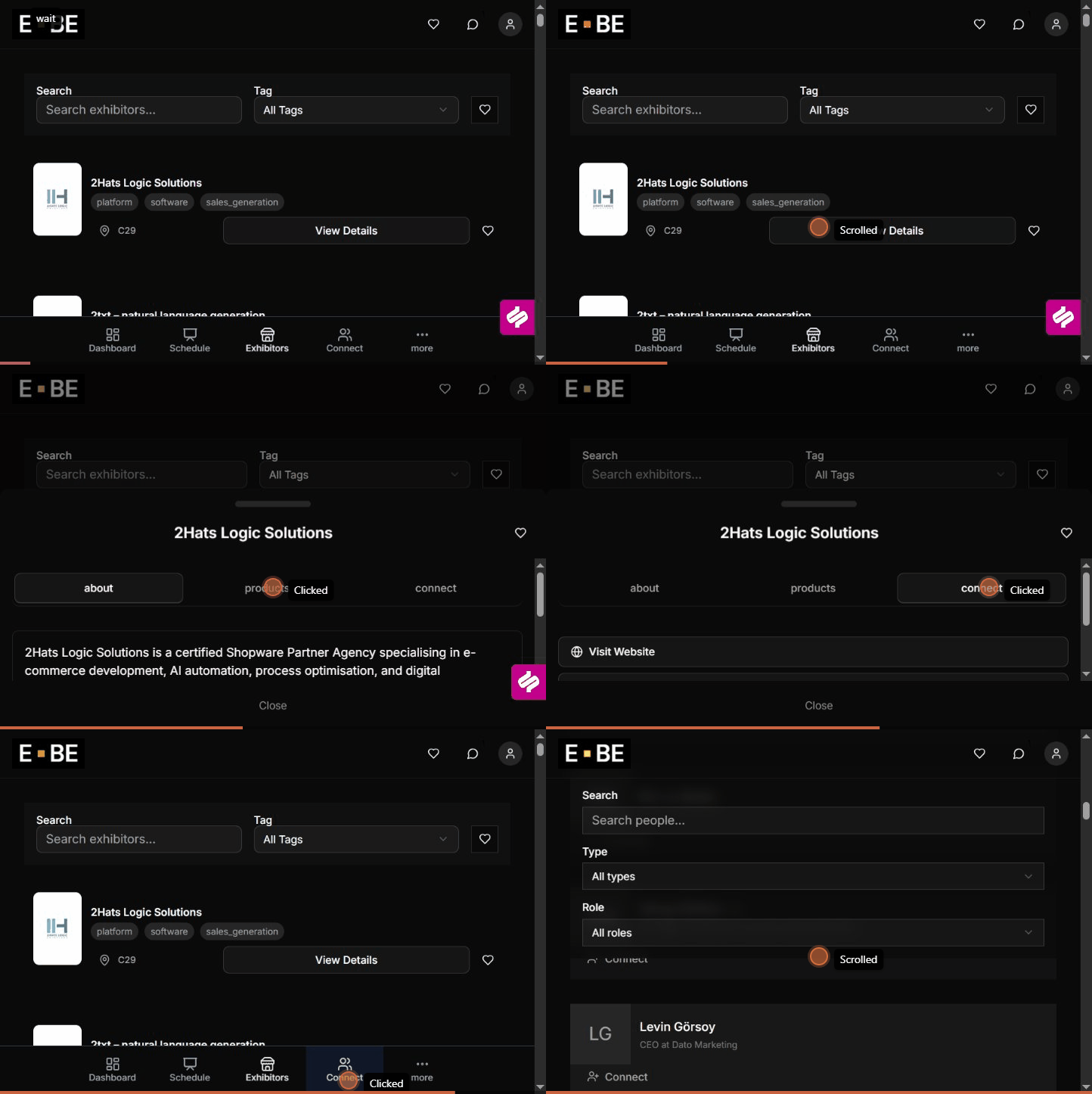
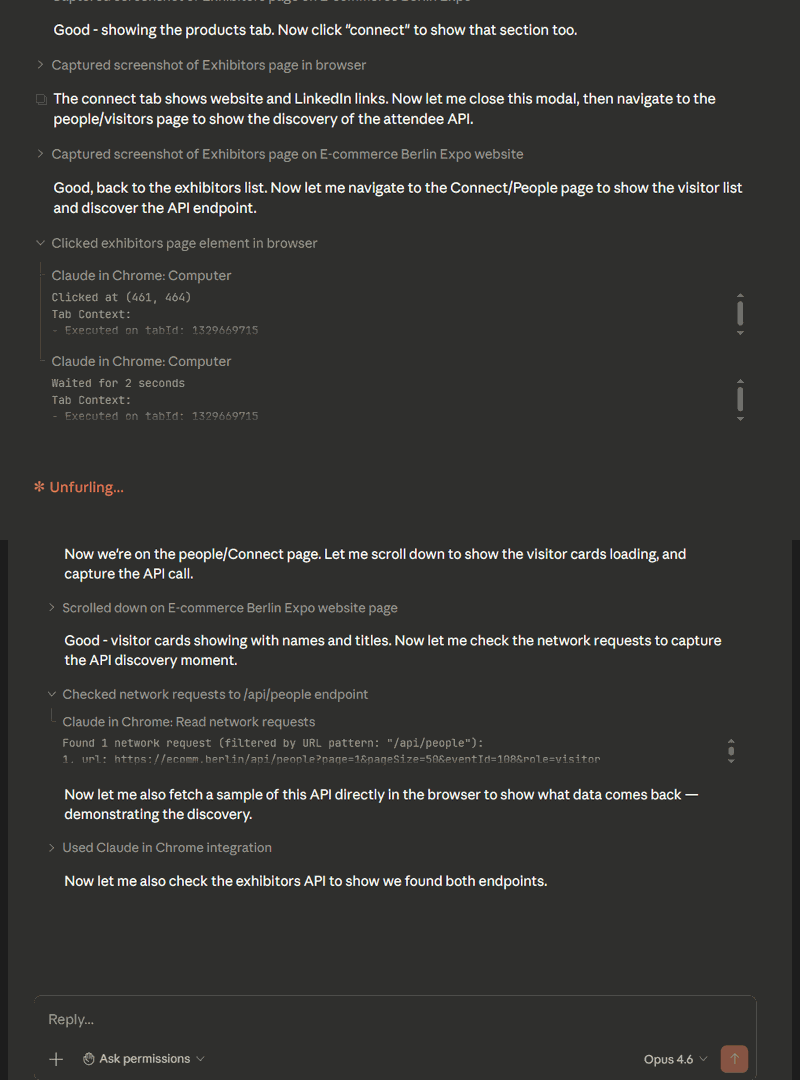
Claude Code with the Chrome MCP plugin does all of this for you. It sees the page, identifies how data is loaded, catches the API calls, and interacts with the site directly. It handles human-in-the-loop actions when needed - in my case, the platform required a magic link email login, so I logged in manually and Claude worked with my authenticated session from there.
It then built and tested the extraction scripts, handled errors, adapted when the API response format changed between endpoints, and iterated through pagination automatically. My years of scraping knowledge mostly just helped me steer it in the right direction a bit faster, but honestly, the tool did the heavy lifting.
What I got:
The platform had three types of data:
- Exhibitor companies (268): Company name, description, website, LinkedIn, products, categories - rich profile data available through a Next.js server action endpoint that Claude discovered by intercepting network requests
- Exhibitor people (1,509): Individual representatives at exhibitor booths with names, job titles, and full company details
- Visitors (10,946): Attendees with names, companies, job titles, industry, company size, revenue range, and business model
Some fields had high coverage (96% had a company name, 92% had a job title), others were spottier (only 10% had a country listed, 73% had revenue data). No dataset is perfect - you make do with what’s available.
The enrichment pipeline: from names to LinkedIn profiles
The raw event data gets you names, companies, and job titles. You won’t have emails. You usually won’t have LinkedIn profile URLs. So this is where programmatic search comes in - and it’s probably my favourite tool in the entire outreach stack.
The pipeline:
-
Build search queries from available data - in this case, name + company worked best. I also tried name + job title + company, but saw lower match rates because the position listed on the event platform sometimes differs from what’s indexed by search engines.
-
Get search results and use AI to analyse the best match from the results returned.
-
Scrape the LinkedIn profile of the best candidate.
-
AI validates the match - comparing the scraped LinkedIn profile against the original event data to confirm it’s the right person.
Each step has its own set of tools and providers. Reach out if you want specifics on what I use - I’ve done it multiple ways depending on what data is available from the source, and there might be more effective approaches depending on your situation.
Results for E-commerce Berlin Expo:
- Exhibitor people: ~1,300 out of 1,500 matched (~87% hit rate)
- Visitors: ~5,500 out of 10,000 matched (~58% hit rate) - though roughly 3,000 visitors had no company associated with their profile, which makes matching nearly impossible
The visitor match rate looks low at first glance, but when you factor out the records with no company data, the effective match rate on workable records is significantly higher.
The bottom line
The event itself is one day. The attendee list is an asset you can work for weeks. Most teams leave this on the table entirely - they follow up with the 15 people they scanned badges with and call it done.
With the right extraction and enrichment pipeline, you can turn a networking platform that everyone ignores after the event into thousands of warm, contextual outreach opportunities. The tech to do this is now accessible enough that you don’t need to be a developer. You just need to know what to ask for.